25 Years of Reading the Names
The reading of the names takes about 4 hours. There is no way to shorten it, and nobody has ever tried. Two people step to the lectern, read a short list of strangers, say one sentence to the one person on that list they loved, and step away so the next two can begin. This morning in Lower Manhattan it is happening for the 25th time.
The List That Refuses Hierarchy
2,983 names are read. They belong to the men, women, and children killed on September 11, 2001, and to the 6 people killed in the bombing of the World Trade Center in February 1993. The list is not arranged by rank or by title. A bond trader follows a dishwasher. A battalion chief follows a bookkeeper. Whoever built that list understood something true about how a country ought to remember.
Then The Pipes
A bagpipe is a difficult instrument to love until you have heard one played for the dead. It does not console you and it does not resolve. It holds a single low note beneath the melody and refuses to release it, and that drone is the nearest sound we have ever made to grief itself. When the pipes come up the plaza with the drums falling in behind them, men who have not wept in 20 years put a hand across their mouth. The instrument does not ask permission. It reaches in and takes what it came for.
The Ones Who Moved Toward It
343 members of the New York City Fire Department were killed that day. 37 officers of the Port Authority police. 23 officers of the New York City police. Set beside them the paramedics who built triage in the street while the air turned solid, the doctors and nurses across every hospital in the city who cleared beds through the night for patients who never arrived, the building engineers who stayed at their panels to hold the stairwell lights and the elevators, and the ironworkers and operating engineers who drove in with their own rigs and worked the pile for months afterward. Every one of them moved toward the thing that everyone else was moving away from.
The morning did not belong to New York alone. 184 people were killed at the Pentagon. 40 passengers and crew died in a field in Pennsylvania after they decided, in the few minutes they were given, to take the airplane back.

The Silence That Took 25 Years
This year the ceremony adds a seventh moment of silence, and it is for the people who did not die on the day. The rescue and recovery and relief workers, and the residents of Lower Manhattan, who breathed what was in that air and carried it home in their lungs, and who have been dying of it ever since. More than 8,000 people enrolled in the World Trade Center Health Program have since died. That silence took 25 years to arrive and it belongs in the program permanently now.
Some of the service members who deployed because of that morning were in grade school when the towers fell. Others were not yet born and enlisted anyway. We honor them today alongside the firefighters, and we honor the families who did the waiting, because waiting is its own kind of service and it is never counted.
Two Columns Of Light, And The People Who Test Them
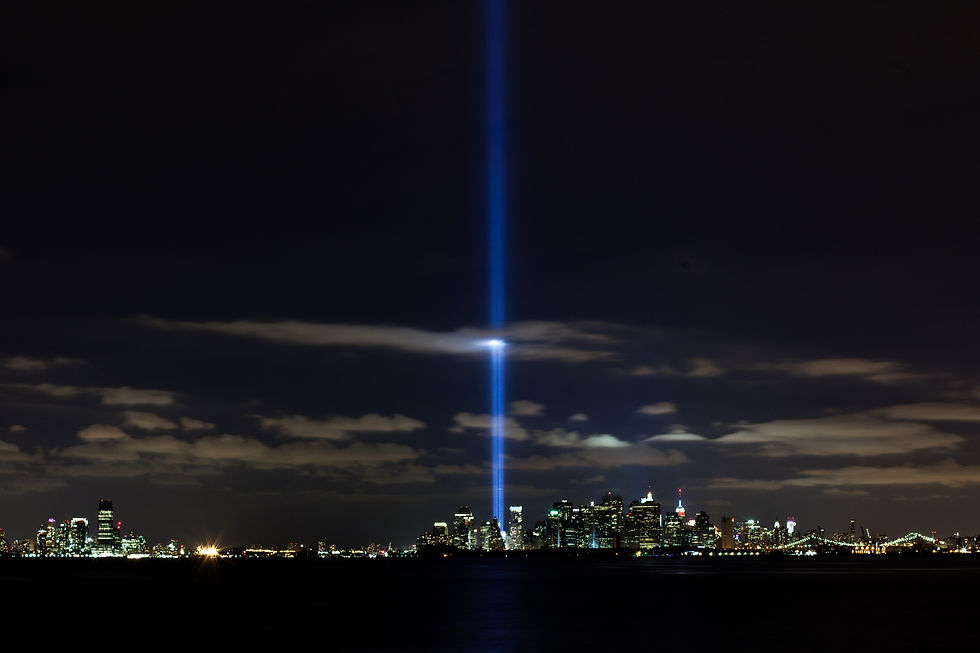
Tonight two columns of light will stand over Lower Manhattan. They are built from 88 searchlights of 7,000 watts each, set on the roof of a parking garage and aligned into two squares of 48 feet to match the footprint of the towers. The beams reach roughly 4 miles into the sky. None of that arrives by sentiment. Someone rigs the fixtures. Someone pulls the power and runs the load calculation. Someone tests every single lamp in the days beforehand, because a lamp that fails after dark on the 25th anniversary is not a maintenance ticket. It is a broken promise to 2,983 families. The light is the memorial. The testing is what allows the memorial to keep its word.
That distinction is the whole of our work. Worlá Capital acquires businesses where the cost of failure runs far ahead of the cost of the service, and we hold them for the long term. The load bank test that ran to full load and produced a signed report. The transfer switch somebody actually exercised. The inspection tag with a real date on it and a real name beneath the date. The relay somebody set and then proved. We made that argument in plain terms earlier today in the morning handover. Four capabilities carry the idea: assurance, inspection, testing, and compliance; critical facility mechanical and electrical services; utility and linear infrastructure services; and specialized asset maintenance, repair, and calibration.
The Same Cloth
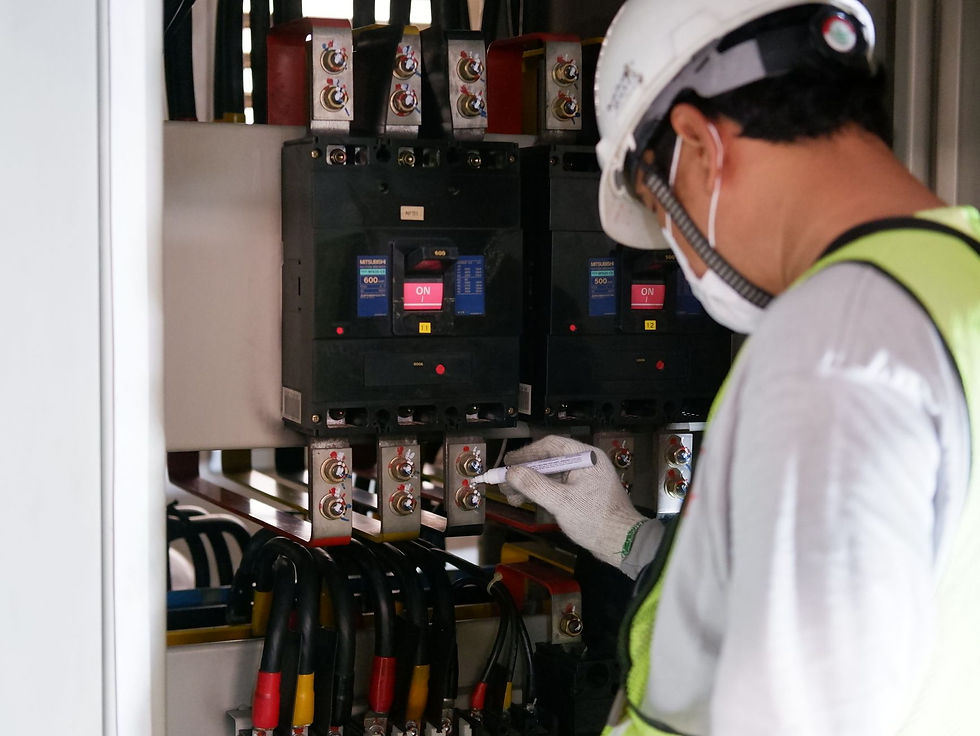
The people who do that work are cut from the same cloth as the crews who climbed those stairwells. They are electricians and fire protection technicians and calibration specialists and line crews and stationary engineers. They carry a certification card, a torque wrench, and a standard they will not bend for anyone. They work nights and weekends and holidays so that a hospital holds its operating rooms, a water plant holds its pumps, a substation holds its load, and a data hall stays cold. Nobody applauds a shift where nothing happened. The shift where nothing happened is the entire point. We wrote about those crews before in Mission Critical Services and the Ones Who Show Up.
Most of these companies were built by one person who answered the telephone at 2 in the morning for 30 years. When that founder begins to think about what comes next, the question is seldom really about price. It is whether the crew keeps its name, its standard, and its work. We buy to operate and to hold, and we treat a founder's legacy as an asset that arrived with the company and deserves to survive the transaction.
25 years on, the instruction from that morning has not changed. Some people run toward the thing that is failing. The rest of us owe them a world where less of it fails. In practice that is a maintenance schedule, an inspection tag, a tested breaker, a trained crew, and somebody who cares enough to sign their own name to the report.
May their memory be a blessing, and may the crews still standing watch tonight come home safe.
If you build, lead, or steward this kind of work, or you simply want to understand how we think about it, you are welcome at worla-capital.com.
Frequently Asked Questions
How many names are read aloud at the September 11 ceremony?
2,983 names are read. They belong to the men, women, and children killed on September 11, 2001, and to the 6 people killed in the bombing of the World Trade Center in February 1993.
What is the seventh moment of silence?
This year the ceremony adds a seventh moment of silence, and it is for the people who did not die on the day.
Why does Worlá Capital focus on mission-critical services?
Worlá Capital acquires businesses where the cost of failure runs far ahead of the cost of the service, and we hold them for the long term.
What are the four Worlá Capital acquisition capabilities?
Four capabilities carry the idea: assurance, inspection, testing, and compliance; critical facility mechanical and electrical services; utility and linear infrastructure services; and specialized asset maintenance, repair, and calibration.