Why Environmental Services Businesses Get Acquired
For owners and operators, environmental services business acquisition shapes business durability, transfer readiness, and long-term value.
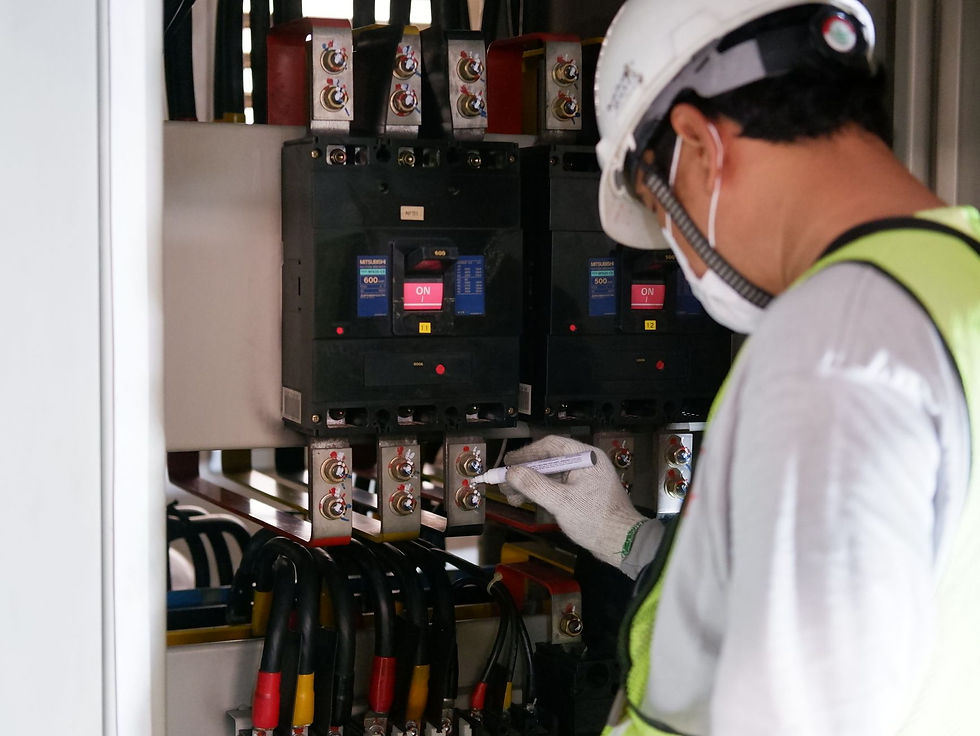
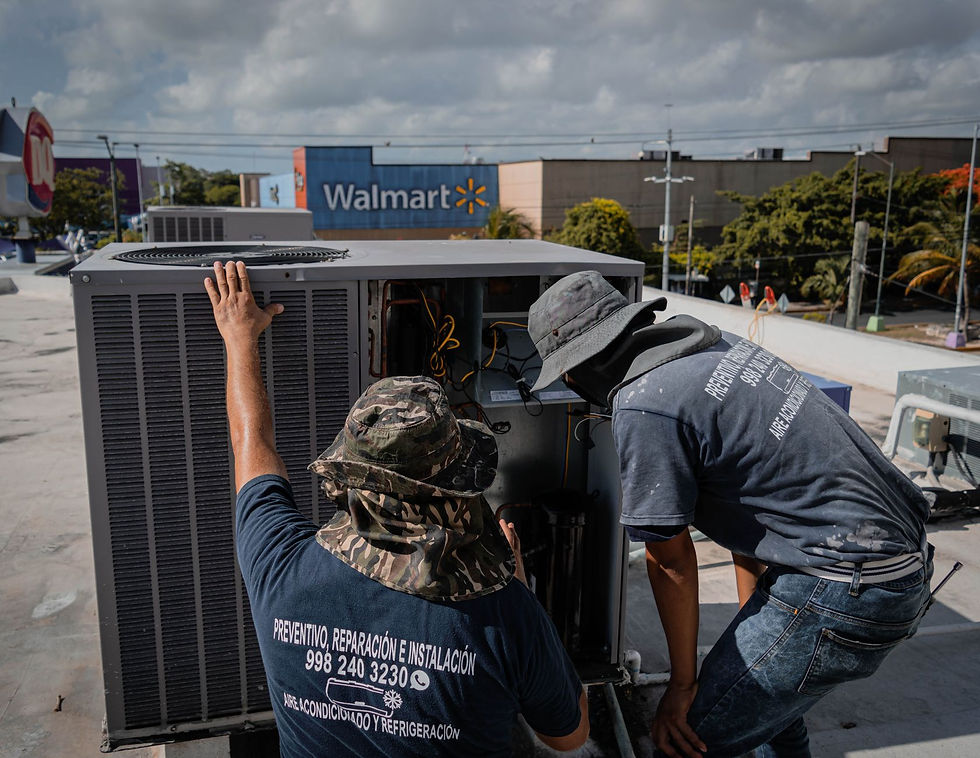
Nobody notices the crew that services the rooftop unit until the day the building's air stops moving. That quiet, unglamorous work, filtration, air handling, water treatment, waste and hazardous material management, is easy to overlook precisely because it succeeds by being invisible. When it is done well, a building simply works, and the people who own that responsibility rarely get thanked for it. They also rarely have to wonder where next month's revenue will come from.
Environmental services businesses have become one of the more sought-after acquisition targets in the mission-critical space, and the reason has little to do with growth stories or market timing. It has to do with the structural nature of the demand itself: the work exists because a building must remain habitable, a facility must remain compliant, and a regulator will not accept an excuse for why the maintenance schedule slipped.
Why Environmental Services Demand Persists Through Economic Cycles
A commercial building's mechanical and environmental systems do not pause their wear and tear because the broader economy has slowed. Filtration systems still clog, water systems still need testing, and waste streams still need proper handling, regardless of whether the tenant occupying that building is thriving or struggling. This is the core reason environmental services demand behaves so differently from demand tied to consumer spending or discretionary capital projects: the obligation attaches to the building and the activity inside it, not to the health of the broader economy.
There is a regulatory layer beneath this as well that most outsiders underestimate. Many of the inspections, tests, and remediation activities that environmental services firms perform exist because a regulator requires documented proof that they occurred, not because a property owner decided it would be a good idea. A building owner who lets that documentation lapse is not simply taking on operational risk; they are exposing themselves to fines, insurance complications, and in some cases the inability to legally occupy the space at all. That dynamic gives the service provider a form of leverage that has nothing to do with salesmanship and everything to do with the law.
This is also why the sector holds up so consistently across cycles that punish more discretionary trades. When a company is deciding where to cut costs during a downturn, environmental compliance work is one of the last places most operators are willing to touch, because the downside of getting caught out of compliance vastly exceeds whatever is saved by deferring the service.
The Quality Hidden Inside Routine, Recurring Work
On paper, environmental services work can look almost boring: scheduled visits, standardized checklists, contracts that renew quietly year after year without much drama. That apparent simplicity is exactly what makes the earnings underneath it so valuable to a careful buyer. Revenue that renews because a maintenance schedule requires it, rather than because a sales team convinced a customer to buy again, is a fundamentally different kind of revenue, and it deserves to be treated differently when a business is being valued.
The stickiness goes further than the contract itself. A facility that has trusted a particular provider with its filtration systems, its hazardous waste handling, or its water treatment protocols for years has effectively outsourced a form of regulatory risk to that provider, and switching providers means re-underwriting that risk with someone new. Facility managers are, understandably, reluctant to do that without a strong reason, which is why customer relationships in this sector tend to last far longer than a simple service contract would suggest on its own.
There is also a technical moat that builds quietly over time. A crew that has serviced the same set of buildings for a decade develops a working knowledge of each system's quirks, its history of prior issues, and its specific compliance requirements that a new provider simply cannot replicate on day one. That accumulated knowledge is rarely written down anywhere formal, but it shows up directly in service quality, in response time during an emergency, and in the trust a facility manager places in the crew that shows up.

What a Careful Buyer Actually Diligences in This Sector
A buyer who understands environmental services examines revenue, margin, contract mix, customer tenure, safety, and regulatory exposure together; they look closely at the mix of contract types, the average tenure of the customer base, and how much of the work is genuinely mandated versus optional. A business where the bulk of revenue is tied to code-required activity carries a very different risk profile than one where a meaningful share is discretionary and could be paused if a customer wanted to save money for a quarter.
Licensing and certification are examined with equal care, because much of this work legally requires specific credentials, and the value of the business depends heavily on whether those credentials live with a handful of individuals or are institutionalized across the organization. A business overly dependent on one licensed individual carries a form of key-person risk that a buyer has to plan around carefully, often by building a succession path for that credential into the earliest days of ownership.
Equipment condition and safety record round out the picture. In work that touches hazardous materials and regulated waste streams, a poor safety history or aging equipment is not merely a cost center to be addressed later; it is a signal about how the business has been run and how much latent risk sits beneath the surface of an otherwise clean set of financials.
How We Approach Environmental Services Owners
We come to this sector with real respect for how demanding the work actually is. Handling hazardous materials correctly, keeping documentation audit-ready, and training a crew to do dangerous work safely, year after year, is a genuine operational achievement, not a commodity service that happens to generate steady cash flow. We want to understand how a founder built that discipline into the organization, because that discipline is precisely what we intend to protect and build upon.
The wrong buyer sees a checklist business and looks for costs to cut. We see a business that quietly protects the health and safety of everyone who works inside the buildings it services, and we think that responsibility deserves an owner who takes it as seriously as the founder who built the company did.
If you have built an environmental services business you are proud of and you are beginning to think about what comes next, we would welcome the chance to understand it properly.
If that is a conversation worth having, you can find us at worla-capital.com.
What Is Changing in PFAS Compliance in 2026?
The U.S. Environmental Protection Agency's 2026 perfluoroalkyl and polyfluoroalkyl substances implementation update keeps enforceable limits for perfluorooctanoic acid and perfluorooctane sulfonic acid while proposing additional implementation time for qualifying water systems. The operating demand spans monitoring, communication, engineering, treatment, documentation, and recurring compliance support.
Related Worlá Capital Insights
Data Center Reliability Services: The Work Behind AI and Mission Critical Services and the Ones Who Show Up offer related perspectives on durable ownership and operating readiness.
Learn more at worla-capital.com.
Worlá Capital